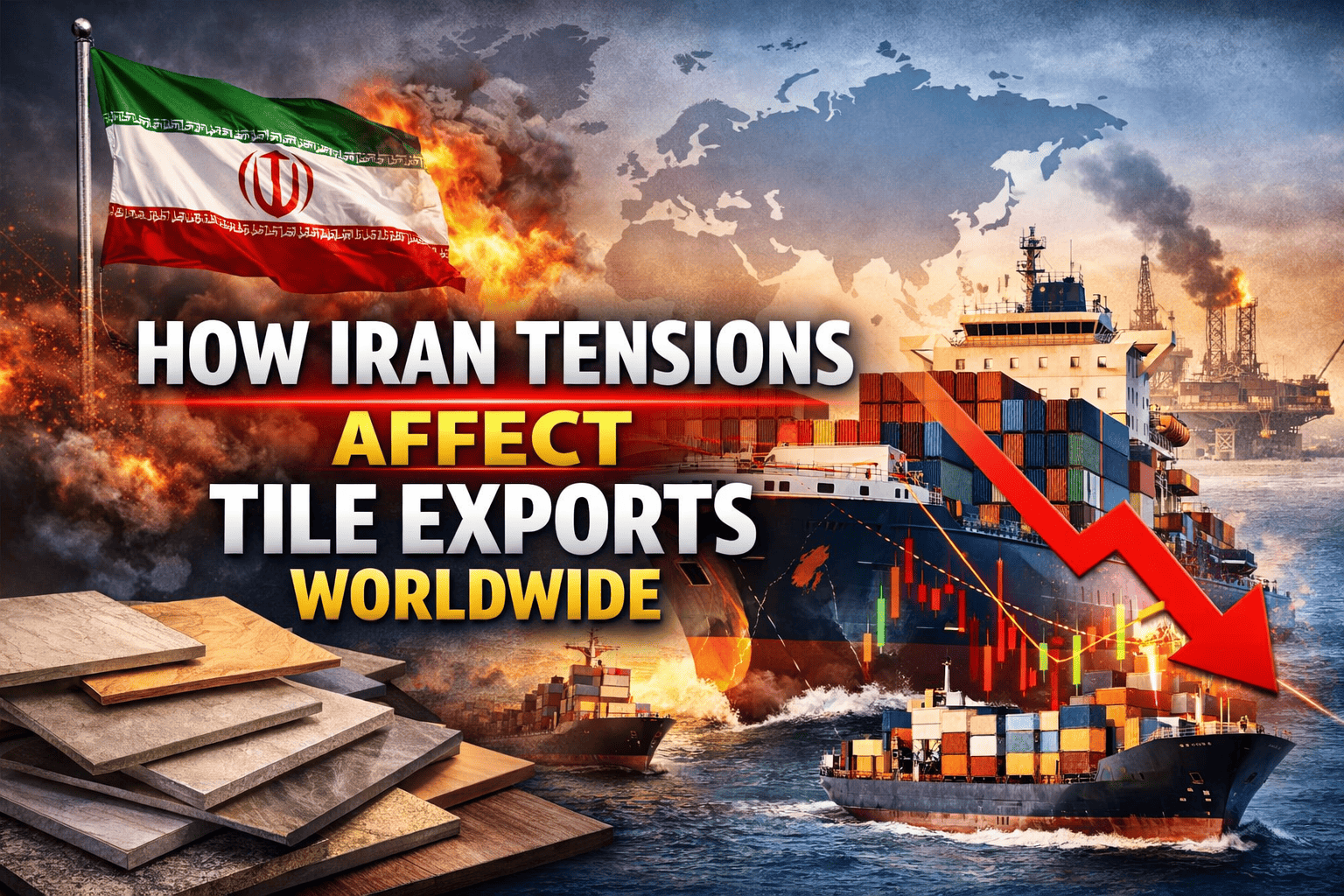
The global ceramic tile industry is deeply interconnected with geopolitics, energy markets, and international trade routes. Recent tensions involving Iran have created ripple effects across multiple industries—including the global tile export market.
From rising energy costs to shipping disruptions and supply chain uncertainties, political instability in the Middle East can significantly influence the availability, pricing, and movement of ceramic tiles worldwide. In this article, we explore how Iran-related tensions impact tile exports globally and what it means for manufacturers, exporters, and buyers.
Iran’s Role in the Global Tile Industry
Iran plays an important role in the global ceramic tile market. The country is currently one of the world’s largest producers and exporters of ceramic tiles. In fact, Iran ranks among the top five tile-producing countries globally, exporting around 40% of its ceramic tile production to international markets.
Iranian tiles are shipped to more than 50 countries worldwide, with significant demand in nearby regions such as Iraq, Pakistan, Central Asia, and parts of Africa.
Because of this strong export presence, any geopolitical instability involving Iran can quickly affect global supply, pricing, and trade flows.
Rising Energy Costs Impact Tile Production
One of the most immediate effects of geopolitical tensions involving Iran is the increase in global energy prices. The Middle East is a major energy hub, and conflicts in the region often lead to higher oil and gas prices.
This directly affects tile manufacturers because ceramic tiles require high temperatures during production. Kilns used in tile factories rely heavily on natural gas, propane, or other fuels to fire tiles.
When energy prices rise:
-
Production costs increase for manufacturers
-
Profit margins shrink
-
Export prices become less competitive
Manufacturers in energy-dependent regions may slow down production or pass the additional costs on to buyers.
Fuel Supply Disruptions Affect Manufacturing
Beyond higher prices, geopolitical conflicts can also disrupt fuel supplies.
Recent tensions in the Middle East have already created difficulties for ceramic manufacturers in major production hubs. For example, tile manufacturers in Morbi, India—one of the world’s largest tile production clusters—have faced severe fuel shortages due to disruptions in propane and natural gas supply linked to the regional conflict.
Morbi alone houses hundreds of ceramic manufacturing units and employs hundreds of thousands of workers, making it a critical hub for global tile exports.
If fuel shortages persist, production slowdowns or factory shutdowns can significantly reduce global supply.
Shipping and Logistics Challenges
International trade routes passing through the Middle East are crucial for global exports. When tensions rise in the region, shipping routes may become riskier or more expensive.
Key issues include:
-
Higher war-risk insurance premiums
-
Increased freight charges
-
Shipping delays
-
Reduced vessel availability
For tile exporters, this means higher logistics costs and longer delivery times.
In some cases, exports to Middle Eastern markets may temporarily halt due to security concerns or shipping disruptions. This can affect both suppliers and buyers who depend on regular trade flows.
Export Market Instability
Iran tensions can also disrupt demand patterns in major construction markets.
Many countries in the Middle East are large consumers of ceramic tiles due to ongoing infrastructure and real estate development. When political instability occurs:
-
Construction projects may slow down
-
Imports may decline temporarily
-
Currency fluctuations may affect purchasing power
This uncertainty makes it harder for exporters to plan production volumes and maintain stable export contracts.
Market Opportunities for Alternative Exporters
While tensions create challenges, they also open opportunities for tile exporters in other countries.
If Iranian exports slow due to sanctions, logistics issues, or political restrictions, buyers often look for alternative suppliers. Countries like:
-
India
-
China
-
Spain
-
Turkey
-
Brazil
may capture a larger share of global demand.
Exporters with strong logistics networks, stable fuel supply, and consistent quality standards can benefit from this shift.
Impact on Global Tile Prices
The combination of higher production costs, disrupted supply chains, and shifting demand can lead to fluctuations in global tile prices.
Potential price impacts include:
-
Short-term price spikes due to supply shortages
-
Higher freight costs added to export pricing
-
Regional price differences depending on logistics routes
For international buyers and importers, this means careful planning and diversification of suppliers.
How Tile Exporters Can Adapt
In times of geopolitical uncertainty, successful tile exporters focus on resilience and flexibility. Some strategies include:
1. Diversifying Export Markets
Reducing dependence on a single region helps maintain stable sales during geopolitical disruptions.
2. Optimizing Logistics Networks
Working with multiple shipping partners and alternative routes can reduce delays.
3. Improving Energy Efficiency
Modern kilns and energy-efficient production technologies can reduce reliance on expensive fuels.
4. Strengthening Supply Chains
Reliable raw material sourcing and fuel contracts help maintain consistent production.
The Future of Global Tile Export
The ceramic tile industry will continue to be influenced by geopolitical developments, especially in energy-producing regions like the Middle East.
While tensions involving Iran may create short-term challenges, the global demand for tiles—driven by urbanization, infrastructure development, and real estate growth—remains strong.
Manufacturers and exporters who can adapt to changing market conditions will be best positioned to thrive in the evolving global trade landscape.
Conclusion
Iran tensions highlight how closely the tile industry is connected to global politics, energy supply, and trade routes. Rising fuel costs, shipping disruptions, and market uncertainty can all influence tile exports worldwide.