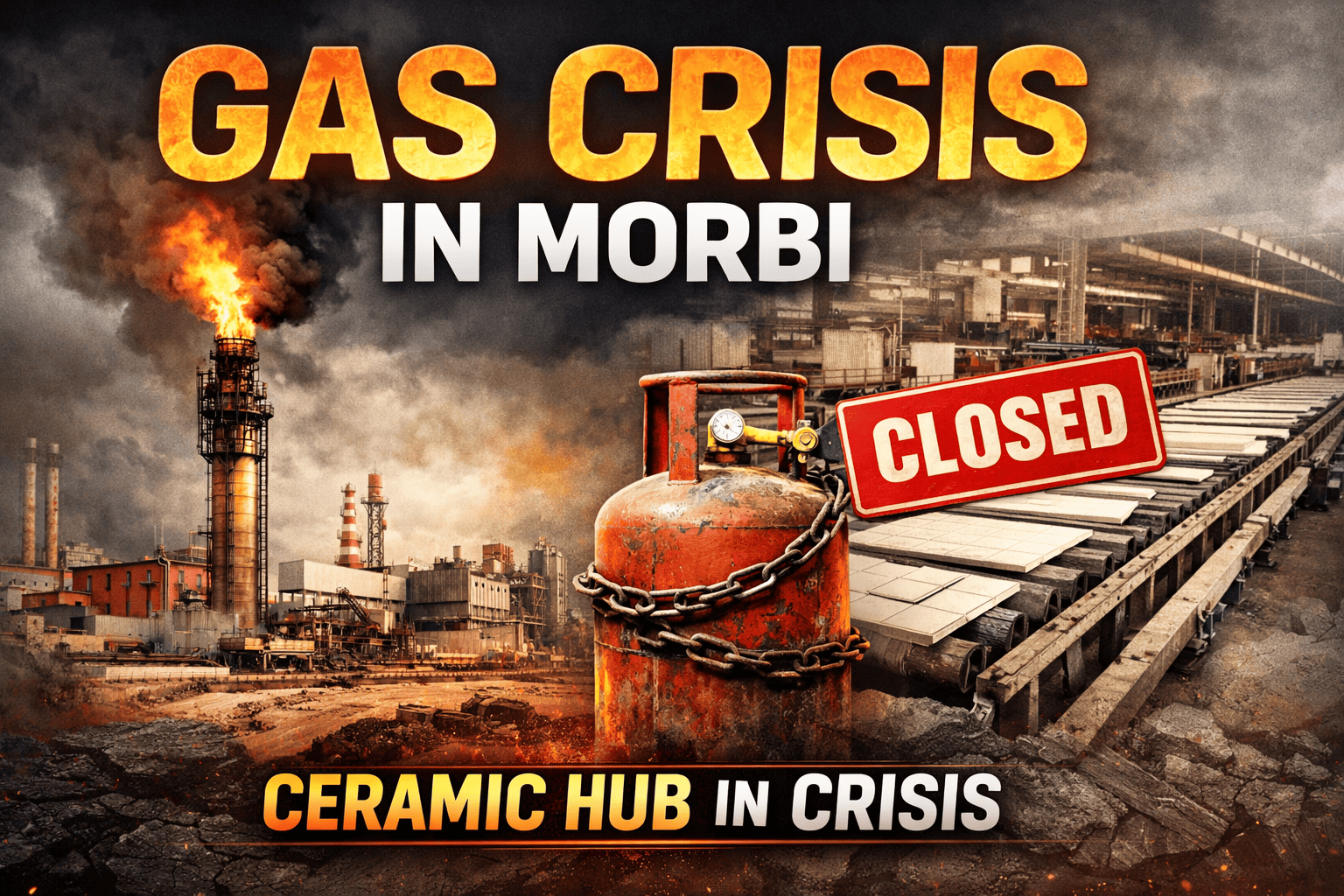
Morbi, a city in Gujarat, is not just another industrial cluster—it is the ceramic capital of India and the second-largest ceramic hub in the world. Contributing nearly 80–90% of India’s ceramic output and exports, this region powers a multi-billion-dollar industry and supports lakhs of livelihoods.
However, in recent weeks, Morbi has been grappling with an unprecedented crisis—a severe gas supply disruption that has brought production to a near standstill. What makes this situation more alarming is that the root cause lies thousands of kilometers away: geopolitical tensions in West Asia.
How Iran Tensions Affect Tile Exports Worldwide
Understanding the Gas Crisis
The ceramic industry is energy-intensive, relying heavily on natural gas and propane to fire kilns and process tiles. In Morbi alone, hundreds of units depend on uninterrupted fuel supply for daily operations.
The ongoing conflict in West Asia—particularly involving Iran—has disrupted global energy supply chains. The Strait of Hormuz, a critical route through which nearly 20% of the world’s energy flows, has faced severe restrictions, choking fuel supplies to countries like India.
As a result:
- Natural gas supply has been cut significantly (up to 50% reduction)
- Propane imports from Gulf countries have slowed drastically
- Prices of available fuel have surged
This combination has triggered a cascading crisis for Morbi’s ceramic manufacturers.
Impact on the Ceramic Industry
Large-Scale Shutdown of Units
The most immediate impact has been widespread shutdowns:
- Over 400–450 ceramic units have suspended operations
- Some estimates suggest up to 800 units affected
- Production has been halted for weeks, with uncertainty over restart timelines
Without fuel, kilns cannot operate—making production impossible.
Economic Losses and Export Disruptions
Morbi’s ceramic industry is valued at ₹650–750 billion, with a significant portion of output exported globally.
The crisis has led to:
- Export orders being delayed or cancelled
- Shipping costs rising 20–30 times in some cases
- Consignments stuck due to logistical disruptions
This not only impacts manufacturers but also weakens India’s position in global ceramic markets.
Employment and Livelihood Concerns
The ceramic ecosystem in Morbi directly and indirectly supports up to 9–10 lakh jobs.
With factories shut:
- Workers face wage losses
- Migrant laborers are returning home
- Ancillary industries (transport, packaging, logistics) are also affected
The social impact of the crisis is as severe as the economic one.
Ripple Effect on Allied Industries
The slowdown in Morbi is already impacting other sectors:
- Construction costs are rising due to tile shortages
- Real estate projects face delays
- Downstream industries dependent on ceramic products are disrupted
This highlights how deeply integrated Morbi is within India’s broader industrial ecosystem.
Key Challenges Exposed
The crisis has revealed structural vulnerabilities:
Heavy Dependence on Imported Fuel
Morbi’s reliance on propane and LNG imports makes it highly sensitive to global disruptions.
Limited Fuel Alternatives
Restrictions on alternative fuels (like coal gasifiers due to environmental norms) limit flexibility during crises.
Supply Chain Fragility
Global conflicts can instantly disrupt local manufacturing due to interconnected supply chains.
The Road Ahead: Possible Solutions
While the crisis is ongoing, it offers an opportunity to rethink and strengthen the industry:
1. Diversification of Energy Sources
- Exploring renewable energy integration
- Revisiting cleaner alternative fuels
- Investing in energy-efficient kiln technologies
2. Policy Support
- Temporary subsidies or relief on fuel costs
- Financial assistance for MSMEs
- Faster approvals for alternative fuel usage
3. Strategic Fuel Reserves
- Building buffer stock mechanisms
- Long-term contracts with diversified suppliers
4. Supply Chain Resilience
- Reducing overdependence on a single region
- Strengthening domestic logistics and storage infrastructure
Conclusion
The gas crisis in Morbi is more than a regional industrial issue—it is a wake-up call for India’s manufacturing ecosystem. It underscores how global geopolitical tensions can directly impact local industries, livelihoods, and economic stability.
For businesses, policymakers, and industry leaders, the focus must now shift from short-term survival to long-term resilience.