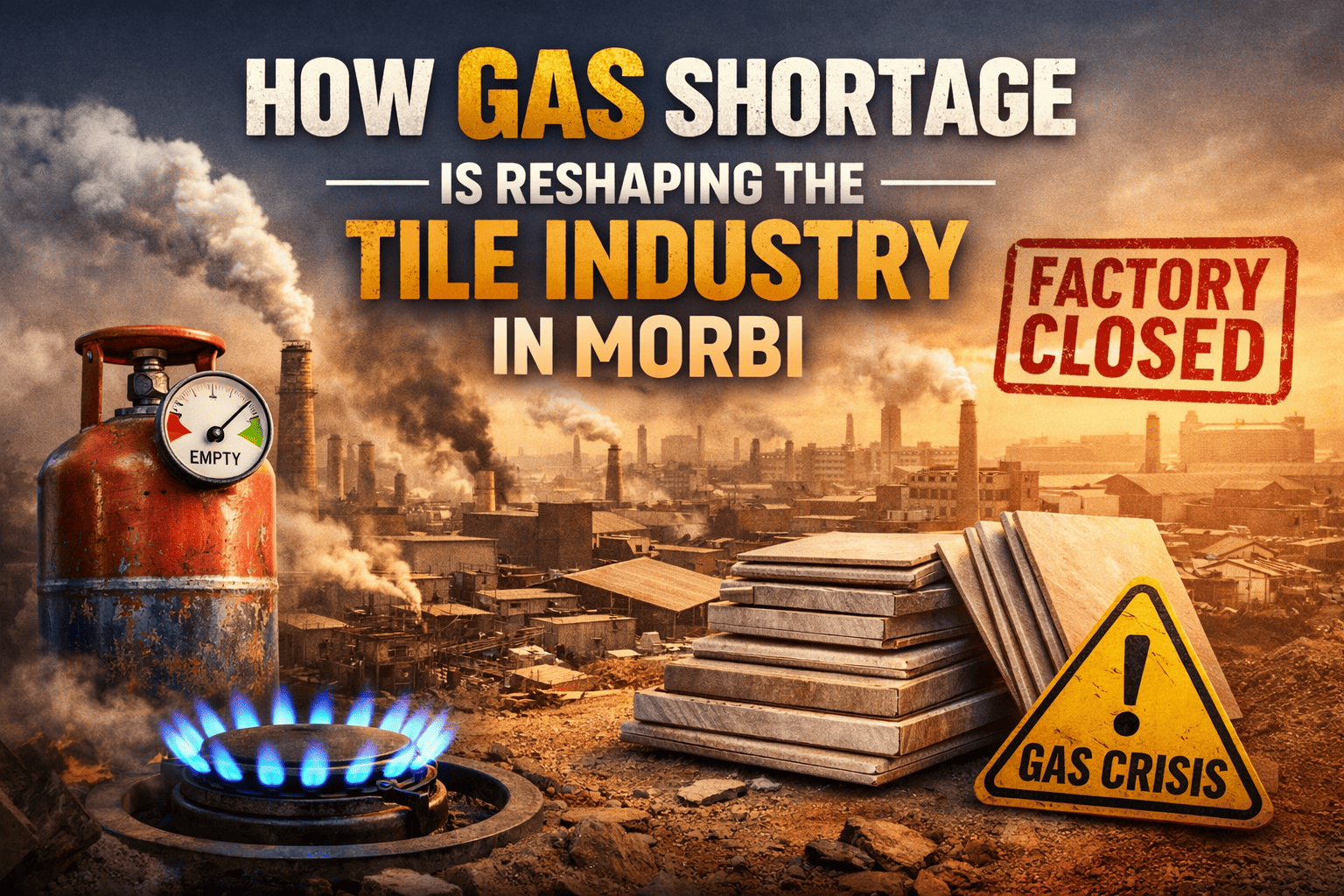
Morbi, often called the ceramic capital of India, has long been the backbone of the country’s tile manufacturing ecosystem. Producing nearly 80–90% of India’s ceramic output, this Gujarat-based cluster fuels both domestic demand and global exports.
But in 2026, an unprecedented gas shortage has disrupted this thriving industry—forcing shutdowns, raising costs, and accelerating structural changes that will define the future of tile manufacturing.
Gas Crisis in Morbi: A Challenge for India’s Ceramic Hub
How Iran Tensions Affect Tile Exports Worldwide
The Backbone of Morbi: A Gas-Driven Industry
Tile manufacturing is an energy-intensive process. From spray drying to kiln firing at extremely high temperatures, continuous fuel supply is non-negotiable.
- Propane-LPG and natural gas power kilns and dryers
- Hundreds of units rely on daily tanker or pipeline supply
- Any disruption immediately halts production
Morbi consumes millions of cubic meters of gas daily, making it one of the most fuel-dependent industrial clusters in India.
What Triggered the Gas Crisis?
The current disruption is not local—it’s global.
- The West Asia conflict has restricted movement through the Strait of Hormuz, a key energy route
- India imports a significant portion of LPG and LNG from the Middle East
- The government has prioritized household supply, limiting industrial availability
As a result, industries like ceramics are facing severe shortages and price spikes.
Immediate Impact on the Tile Industry
1. Mass Shutdown of Factories
Hundreds of tile units in Morbi have paused operations due to lack of fuel.
- Over 200–400 factories affected or shut down
- Industry-wide shutdowns announced by associations
- Production lines and kilns left idle
2. Rising Tile Prices
With supply shrinking and costs rising:
- Tile prices have already increased by ₹2–₹3 per sq. ft.
- Export orders are being delayed or cancelled
- Freight and logistics costs have surged dramatically
3. Workforce Disruption
The crisis is not just industrial—it’s human.
- Lakhs of workers depend on Morbi’s ceramic units
- Shutdowns are triggering migration back to native states
- Local economies—from transport to food services—are impacted
4. Export Slowdown
Morbi is a major export hub, supplying tiles to over 150 countries.
- Export shipments are stalled
- Container costs have surged
- International buyers are facing delays
A Structural Shift in the Industry
While the crisis is severe, it is also accelerating long-term changes.
1. Shift Toward Alternative Fuels
Manufacturers are exploring:
- Electric kilns
- Biofuels and hybrid systems
- Reconsideration of coal gasifiers (despite environmental concerns)
2. Increased Focus on Energy Efficiency
Factories are rethinking:
- Kiln insulation and heat recovery systems
- Process optimization to reduce fuel consumption
- Smart manufacturing technologies
3. Consolidation of the Market
Smaller units, especially MSMEs, are the most vulnerable.
- Financial strain may lead to closures
- Larger, integrated players may gain market share
- Industry consolidation is likely in the coming years
4. Rethinking Supply Chain Strategy
The crisis has exposed a key vulnerability:
Overdependence on imported fuel
Going forward, companies are likely to:
- Diversify energy sources
- Secure long-term fuel contracts
- Invest in captive energy solutions
What This Means for Buyers and Partners
For distributors, builders, and global buyers:
- Expect short-term price volatility
- Lead times may increase
- Product availability may fluctuate
However, in the long run, this transformation could lead to:
- More resilient supply chains
- Improved product quality through modernization
- Greater sustainability focus
Conclusion
The gas shortage has brought Morbi’s tile industry to a critical juncture. What began as a supply disruption is now reshaping the economic, operational, and strategic landscape of the sector.
While the short-term outlook includes shutdowns and uncertainty, the long-term impact may be transformative—pushing the industry toward innovation, efficiency, and resilience.